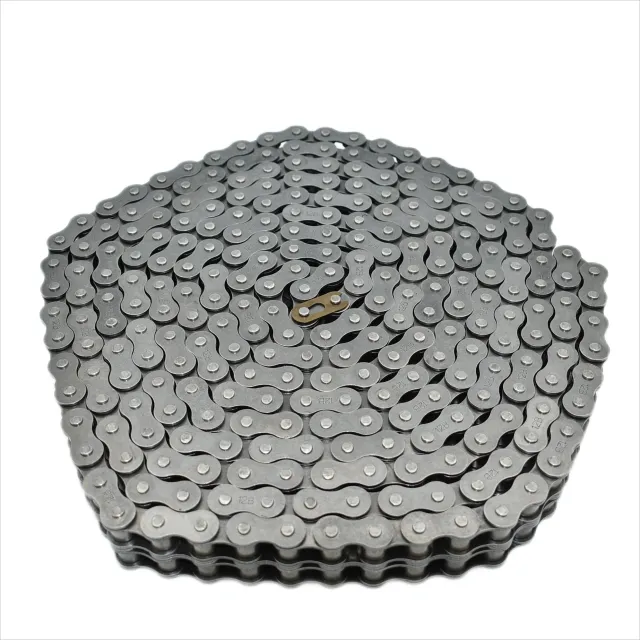
Product Description
| 1)Type | conveyor chain |
| 2)Materials | Carbon steel |
| 3)Chain No. | 10A-K1 |
| 4)Application | Industrial machinery |
| 5)Process | High speed impact, heat treatment, Pre-stretching and running Four sides riveting, Lubricate with Grease |
| 6)MOQ | 1000Pcs |
| 7)Supply Ability | 100000Meters per year |
| 8)Tensile Strength/Hardness | standard or above |
| 9)Delivery Time | within 30 days after receiving your 30% deposits |
| 10)Payment Terms | L/C,T/T |
| 11)Packing | chains packing in standard export carton, also can packing as your requirement |
Our Services
Pre-sales:
1. OEM &ODM service
2. Any of your kind inquiry would be replied within 24 hours.
3. Complete product information will be offered
4. Free sample will be sent if you need .
5. Any other reasonable requirements as per requested
During production ,we provide:
1. Schedule of production
2. Mass production picture will offered
3. Any other reasonable requirements as per requested
Finish production:
1. Courier tracking number
2. Documents you need
3. Protection of your sales area, ideas of design and all your private information.
FAQ:
Q1: Do you inspect the finished products?
A: Yes, each step of production and finished products will be carried out inspection by QC departing before shipping.
Q2: What’s the warranty of your products?
A: Usually we guarantee one year after delivery date, but depending on the specified product.
Q3: Are you manufacturer or Trade Company?
A: Both we are. We have been in motorcycle parts for nearly 20 years.
Q4: How to visit factory?
A: Leave us a message, and we will pick you up by car for free.
Q5: Can you do custom logo on the chain?
A: Yes,we can do custom logos by molding. Need your Authorization Letter
| Material: | Grade a Steel |
|---|---|
| Structure: | Roller Chain |
| Surface Treatment: | Electroplating |
| Transport Package: | Polybag + Color Box + Carton |
| Trademark: | customizable trademark |
| Origin: | China |
| Samples: | US$ 0/Piece 1 Piece(Min.Order) | |
|---|
| Customization: | Available | Customized Request |
|---|
Can an industrial chain be retrofitted to an existing conveyor system?
Yes, an industrial chain can be retrofitted to an existing conveyor system in many cases. Retrofitting involves replacing the existing conveyor belt or alternative power transmission system with an industrial chain to improve performance, increase load capacity, or meet specific application requirements. Here are the key considerations for retrofitting an industrial chain:
- System compatibility: Before retrofitting, it is essential to evaluate the compatibility of the existing conveyor system with an industrial chain. Consider factors such as the structure, design, and components of the conveyor system to ensure proper fit and functionality.
- Chain selection: Choose an industrial chain that is suitable for the specific application requirements and aligns with the load capacity, speed, and environmental conditions of the conveyor system. Consider factors such as chain type, pitch, material, and lubrication requirements.
- Drive system adaptation: Retrofitting an industrial chain may require adjustments to the drive system of the conveyor. This may involve replacing the existing drive components or modifying the drive mechanism to accommodate the chain drive.
- Installation and alignment: Proper installation and alignment of the industrial chain are crucial for optimal performance. Ensure that the chain is tensioned correctly, aligned with the sprockets, and properly lubricated.
- Maintenance and monitoring: Implement a maintenance plan to regularly inspect and lubricate the industrial chain. Monitor the chain’s performance, including tension, wear, and any signs of failure, to ensure smooth and efficient operation.
- Safety considerations: Retrofitting an industrial chain requires adherence to safety standards and guidelines. Ensure that the retrofitting process does not compromise the safety of personnel or the integrity of the conveyor system.
It is recommended to consult with an experienced engineer or conveyor system specialist when retrofitting an industrial chain to an existing conveyor system. They can provide expert advice, conduct a thorough assessment, and ensure a successful retrofit that improves the performance and reliability of the conveyor system.
What are the noise levels associated with industrial chains?
The noise levels associated with industrial chains can vary depending on several factors, including chain design, lubrication, and operating conditions.
Chain Design: The design of the industrial chain, including the type of chain and its construction, can impact noise levels. Chains with smoother surfaces and precision manufacturing techniques tend to produce less noise.
Lubrication: Proper lubrication of the chain is essential for reducing noise. Applying a suitable lubricant to the chain can minimize friction and vibration, resulting in quieter operation.
Operating Conditions: The operating conditions of the industrial chain, such as the load, speed, and tension, can also affect noise levels. Higher loads and speeds, as well as inadequate tensioning, can increase noise levels.
Overall, it is important to consider noise levels when using industrial chains, particularly in noise-sensitive environments. Implementing proper chain design, regular lubrication, and maintaining appropriate operating conditions can help minimize noise and create a more comfortable work environment.
How do you properly tension an industrial chain?
Tensioning an industrial chain is a critical step to ensure its proper functioning and longevity. Here are the steps to properly tension an industrial chain:
- 1. Check the manufacturer’s specifications: Refer to the manufacturer’s guidelines or technical documentation to determine the recommended tension range for your specific industrial chain.
- 2. Identify the tensioning points: Locate the appropriate tensioning points on the industrial chain system. These are typically found near the chain’s drive sprocket or pulley.
- 3. Loosen the tensioning device: If there is an existing tensioning device, such as an adjusting bolt or tensioning screw, loosen it to create slack in the chain.
- 4. Apply tension: Apply tension to the chain by either moving the tensioning device or adjusting the position of the chain’s drive sprocket or pulley. The goal is to remove any slack in the chain while maintaining it within the recommended tension range.
- 5. Verify tension: Once the tension is applied, check the tension using a tensioning tool or by applying a moderate force to the chain at a midpoint between the sprockets. The chain should have a slight amount of deflection but should not sag or be excessively tight.
- 6. Lock the tensioning device: Once the proper tension is achieved, secure the tensioning device in place to maintain the tension. This may involve tightening the adjusting bolt or screw or using a locking mechanism specific to your tensioning device.
- 7. Recheck and readjust: After a period of operation, recheck the chain’s tension to ensure it remains within the recommended range. If necessary, make further adjustments to maintain proper tension.
It’s important to follow the manufacturer’s recommendations and guidelines for tensioning procedures specific to your industrial chain. Proper tensioning ensures optimal performance, reduces wear and elongation, and prevents excessive stress on the chain and its components.


editor by CX 2023-08-30