Product Description
| Chain No. | Assembly | Pitch A | Pin Dia. D | Plate | Overall Width | Maximum Allowable Load (lbs) | Average Ultimate Strength (lbs) | Average Weight Per Foot (lbs) Riveted | ||
| Height H | Thickness T | E | ||||||||
| AL Series | ||||||||||
| AL-1644 | 4X4 | 2 | 0.562 | 1.587 | 0.250 | 2.29 | 11,200 | 104,700 | 8.24 | |
LEAF CHAINS
Leaf chains are known for their durability and high tensile strength. They are primarily used in lift device applications such as forklifts, lift trucks, and lift masts. These hard working chains handle the lifting and balancing of heavy loads with the use of sheaves instead of sprockets for guidance. One of the primary differences with leaf chain compared to roller chain is that it only consists of a series of stacked plates and pins, providing superior lifting strength.
Leaf chains are built of interlaced plates held together by rivet pins. They are built with the same high degree of precision as our roller chains. HKK Leaf chains are used for applications that require strong flexible linkage for transmitting motion or lift. Specially selected steel and unique heat treatment assures high strength and durability. The first number or numbers in leaf chains identifies the chain pitch, the last 2 numbers identify the chain’s lacing. New applications should use BL series leaf chains.
Leaf Chain is the most simple of steel chains, consisting only of link plates and pins. This chain generally has greater tensile strength than roller chains and runs over sheaves rather than sprockets. They are suitable for hanging, balancing or motion transmitting applications. Leaf chains are often used as counterweight chains for machine tools, elevator and oven doors, fork lift truck masts, spinning frames and similar lifting or balancing applications.
Plates are connected by pins and hold the tension loaded on the chain.
LEAF CHAINS STRENGHTH
Leaf chains are famous with engineers for their strength in materials handling, such as with forklifts, lift trucks, lift masts, straddle carriers, and other major works of civil engineering. Their long service life, high fatigue strength and maximum wear resistance make them the ideal solution for long-term projects that need to be both reliable and incredibly strong. The compact design of leaf chains allows them to fit well within a variety of systems. The key parts of a leaf chain include:
Link Plates: Close control of the plate dimensions allows for high fatigue strength and long service life.
Pins: The pins pass through the plates and are subject to shearing forces, while the plates articulate on the pins through rotation over the sheave.
AL SERIES TYPE AND BL SERIES TYPE
The American National Standards Institute (ANSI) determines consensus standards for a wide range of products and processes in the U.S. that are also adopted worldwide. This regulatory body provides the chain industry with specifics around size and strength that govern the manufacture of different types of chains, including leaf chains and roller chains. While these standards do not often change, AL Series was removed from ANSI Standard in 1975. The newer edition of the standard is BL Series, which replaced the AL Series. AL and BL Series are dimensionally different. BL Series has a higher tensile strength than AL Series and is more commonly used today. However, older machinery may still use the AL Series of leaf chain, which is still offered by HangZhou Star Machine Technology Co., Ltd. in a variety of different sizes.
When you need a leaf chain to keep your project in balance, contact the experienced professionals at HangZhou Star Machine Technology Co., Ltd. If you’re not sure exactly what type or size of chain that you need, we have decades of experience working with customers to provide the ideal chain or sprocket to keep you moving. We have a full line of Leaf AL Series Chains as well as Leaf BL Series Chains.
Plate configuration and thickness are the same as ANSI G8 roller chain. Pin diameter is almost the same as ANSI G8 roller chain.
BL Series leaf chains consist of link plates which are thicker and larger in contour than the AL Series link plates of the same pitch. The link plateave the same thickness as the link plates of the next larger pitch size in ANSI G8 roller chains. The pins have the same diameter as those of ANSI G8 roller chains of the next larger pitch.
For Applications That Required Strong Flexible Linkage | Ideal for Lifting Applications | Specially Selected Steel | Unique Heat Treatment Process
WHY CHOOSE US
1. Reliable Quality Assurance System
2. Cutting-Edge Computer-Controlled CNC Machines
3. Bespoke Solutions from Highly Experienced Specialists
4. Customization and OEM Available for Specific Application
5. Extensive Inventory of Spare Parts and Accessories
6. Well-Developed CZPT Marketing Network
7. Efficient After-Sale Service System
The 219 sets of advanced automatic production equipment provide guarantees for high product quality. The 167 engineers and technicians with senior professional titles can design and develop products to meet the exact demands of customers, and OEM customizations are also available with us. Our sound global service network can provide customers with timely after-sales technical services.
We are not just a manufacturer and supplier, but also an industry consultant. We work pro-actively with you to offer expert advice and product recommendations in order to end up with a most cost effective product available for your specific application. The clients we serve CZPT range from end users to distributors and OEMs. Our OEM replacements can be substituted wherever necessary and suitable for both repair and new assemblies.
| Standard or Nonstandard: | Standard |
|---|---|
| Application: | Textile Machinery, Garment Machinery, Conveyer Equipment, Packaging Machinery, Electric Cars, Motorcycle, Food Machinery, Marine, Mining Equipment, Agricultural Machinery, Car |
| Surface Treatment: | Baking Paint, Polishing |
| Structure: | Tooth Chain, Leaf Chain |
| Material: | 1045, Q235, Brass, Alloy |
| Type: | Variable Speed Chain, Cranked Link Chain |
| Samples: | US$ 10/Meter 1 Meter(Min.Order) | |
|---|
| Customization: | Available | Customized Request |
|---|
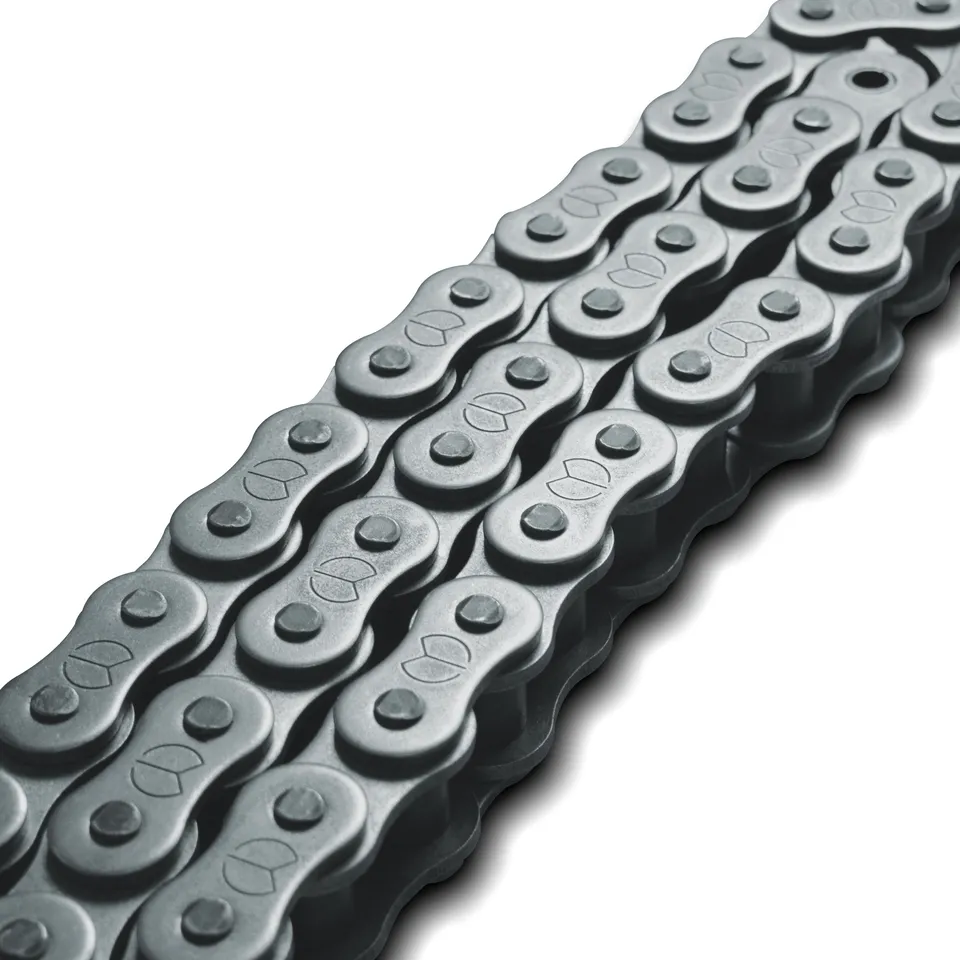
Can an industrial chain be used in food processing applications?
Yes, industrial chains can be used in food processing applications, but it's important to select the right type of chain that meets the specific requirements of the application. Here are some considerations:
- Food-grade materials: When choosing an industrial chain for food processing, it is crucial to ensure that the chain is made of food-grade materials that comply with the necessary food safety standards. Stainless steel or plastic chains are commonly used in food processing due to their corrosion resistance and ease of cleaning.
- Hygienic design: Industrial chains for food processing applications should have a hygienic design that minimizes the accumulation of debris, allows for easy cleaning, and prevents the growth of bacteria. Smooth surfaces, open construction, and self-draining features are desirable.
- Chemical resistance: Food processing environments may involve exposure to various cleaning chemicals and sanitizers. The industrial chain should be resistant to these chemicals to maintain its integrity and avoid contamination.
- Temperature resistance: Depending on the food processing application, the chain may be exposed to high or low temperatures. It’s important to select a chain that can withstand the temperature range required for the specific process.
- Load capacity: Consider the load requirements of the application. Food processing operations may involve heavy loads, so the chain should have the appropriate load capacity to ensure safe and reliable operation.
- Compliance with regulations: Food processing facilities must adhere to strict regulations and standards related to food safety and hygiene. Ensure that the selected industrial chain complies with these regulations to maintain a safe and sanitary environment.
By selecting an industrial chain specifically designed for food processing applications and following proper maintenance and cleaning procedures, the chain can effectively and safely contribute to the food processing operations.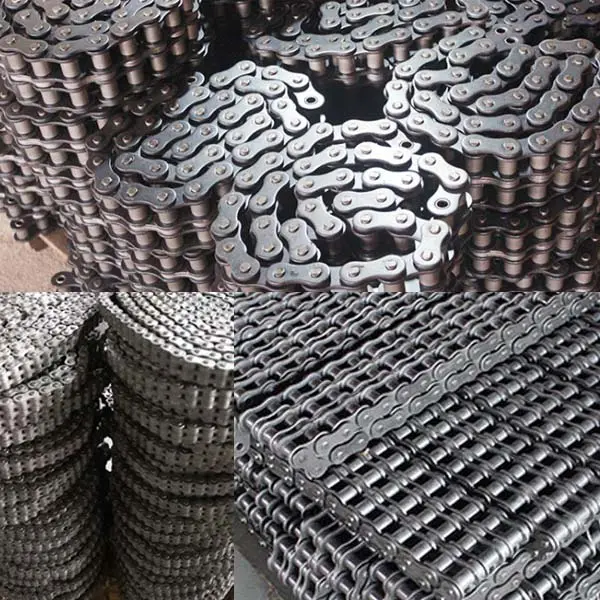
What are the noise levels associated with industrial chains?
The noise levels associated with industrial chains can vary depending on several factors, including chain design, lubrication, and operating conditions.
Chain Design: The design of the industrial chain, including the type of chain and its construction, can impact noise levels. Chains with smoother surfaces and precision manufacturing techniques tend to produce less noise.
Lubrication: Proper lubrication of the chain is essential for reducing noise. Applying a suitable lubricant to the chain can minimize friction and vibration, resulting in quieter operation.
Operating Conditions: The operating conditions of the industrial chain, such as the load, speed, and tension, can also affect noise levels. Higher loads and speeds, as well as inadequate tensioning, can increase noise levels.
Overall, it is important to consider noise levels when using industrial chains, particularly in noise-sensitive environments. Implementing proper chain design, regular lubrication, and maintaining appropriate operating conditions can help minimize noise and create a more comfortable work environment.
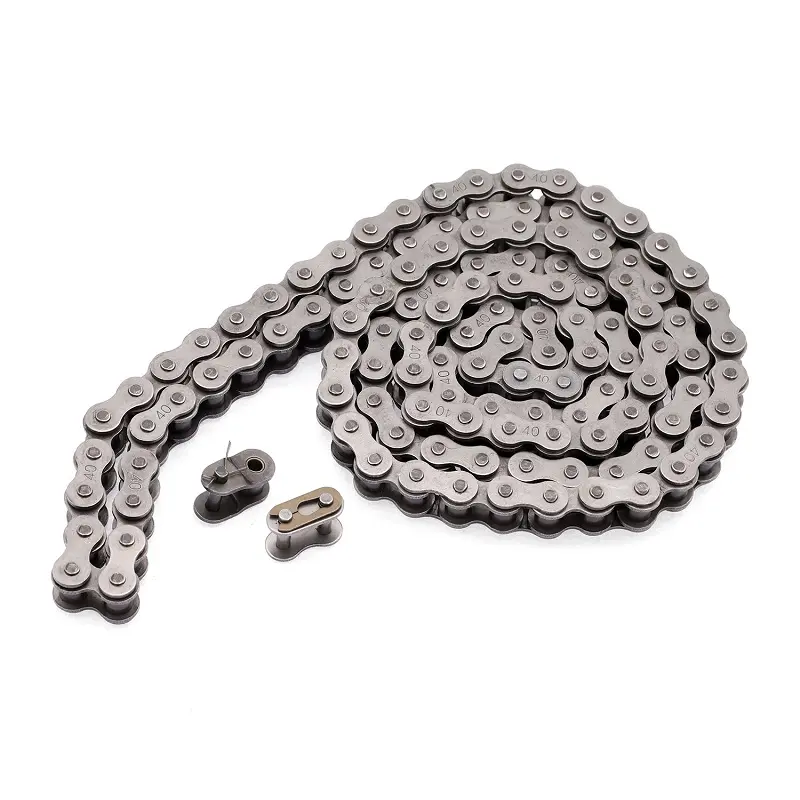
What lubrication is recommended for industrial chains?
Choosing the right lubrication for industrial chains is essential to ensure their smooth operation and longevity. Here are some commonly recommended lubricants for industrial chains:
- Chain Oil: Chain oils are specifically formulated for industrial chain applications. They have excellent penetration and adhesion properties, providing lubrication to the chain’s internal components. Chain oils often have anti-wear and anti-corrosion additives to protect against friction and moisture.
- Grease: Greases designed for industrial chain lubrication offer good adhesion and cling properties. They provide a protective film that stays in place even under high loads and temperatures. Greases can provide long-lasting lubrication and are suitable for applications where oil may not be suitable or accessible.
- Dry Film Lubricants: Dry film lubricants, such as PTFE (polytetrafluoroethylene) or molybdenum disulfide-based coatings, are applied as a thin film to the chain. They create a low-friction barrier between the chain components, reducing wear and enhancing performance. Dry film lubricants are particularly useful in applications where oil or grease may attract dirt, dust, or contaminants.
When selecting a lubricant for industrial chains, consider factors such as operating conditions, temperature, load, speed, and environmental conditions. It’s important to consult the chain manufacturer’s recommendations and follow their guidelines for lubrication intervals and application methods. Regular lubrication and maintenance will help reduce friction, wear, and the risk of chain failures in industrial applications.


editor by CX 2023-08-16