Product Description
About Factory
With more than 18 years’ histiory, we are a professinal manufacturer for drop forged products such as forged chain (X348 X458 X658 X678 X698 F100 F160), scraper chain (10160, 14218, 14226, 142N), conveyor trolley (X348, X458, X678, XT160), and drive chain (X348, X458, X678), and so forth standard moulds of chain.
Besides, we can also produce as per your drawing or sample, special link chain, pusher, pin and plate, according to customers’ unique requirements.
Product Description
1) Material: Alloy steel, 40Cr, 42CrMo and so on.
2) Types: Standard types, X348 X458 X678, and so on. (Or as per your drawing)
3) Process: Moulding→Forging→Polishing & Blasting→Fine machining→Heat treatment→Blasting→Inspecting & testing→Packing
Product Show
Technical Data
| Model | Dimension | Weight (Kg) | Material | Hardness | Working Load (KN) | Limit Load (KN) | ||||||
| P | T | C | S | F | R | D | ||||||
| 10160B | 101.6 | 24 | 36 | 13 | 14 | 6 | 14 | 0.32 | 20CrMnTi | Surface HRC56-64° Depth 0.6-1.2mm | 18 | 100 |
| 10160 | 101.6 | 30 | 36 | 13 | 14.5 | 9 | 14 | 0.36 | 20CrMnTi | Surface HRC56-64° Depth 0.6-1.2mm | 21.6 | 120 |
| 14218 | 142 | 42 | 50 | 19 | 20.5 | 11 | 25 | 1.15 | 20CrMnTi | Surface HRC56-64° Depth 0.6-1.2mm | 48.6 | 270 |
| 14226 | 142 | 62 | 50 | 28 | 30 | 15 | 25 | 1.75 | 20CrMnTi | Surface HRC56-64° Depth 0.6-1.2mm | 61.2 | 340 |
| 2571 | 200 | 66 | 60 | 30 | 32 | 18 | 30 | 2.8 | 20CrMnTi | Surface HRC56-64° Depth 0.6-1.2mm | 72 | 400 |
| 26014 | 260 | 70 | 75 | 31 | 33 | 20 | 34 | 5.2 | 20CrMnTi | Surface HRC56-64° Depth 0.6-1.2mm | 135 | 750 |
| 142N | 142 | 43 | 50 | 19 | 22 | 12.5 | 25 | 1.2 | 40Cr | Quench HRC36-44° | 75.6 | 420 |
| 150D | 142 | 42 | 50 | 19 | 20.5 | 11 | 25 | 1.15 | 40Cr | Quench HRC36-44° | 75.6 | 420 |
| MG20 | 200 | 70 | 50 | 27 | 29 | 17 | 35 | 3.78 | 40Cr | Quench HRC36-44° | 144 | 800 |
| MG20B | 200 | 70 | 50 | 27 | 29 | 17 | 30 | 3.82 | 40Cr | Quench HRC36-44° | 140.4 | 780 |
| MG20C | 200 | 70 | 50 | 27 | 29 | 17 | 28 | 3.85 | 40Cr | Quench HRC36-44° | 122.4 | 680 |
| MS32 | 200 | 42 | 50 | 20 | 22 | 12 | 25 | 1.4 | 40Cr | Quench HRC36-44° | 75.6 | 420 |
| MS55 | 200 | 80 | 70 | 35 | 38 | 25 | 28 | 4.36 | 40Cr | Quench HRC36-44° | 138.6 | 770 |
| 3006 | 200 | 65 | 70 | 30 | 33 | 24 | 32 | 3.6 | 40Cr | Quench HRC36-44° | 160.2 | 890 |
| MS63 | 250 | 70 | 80 | 30 | 33 | 20 | 32 | 4.93 | 40Cr | Quench HRC36-44° | 147.6 | 820 |
| S16 | 100 | 30 | 27 | 15 | 16 | 8 | 14 | 0.3 | 40Cr | Quench HRC36-44° | 16 | 88 |
| S20 | 125 | 34 | 33 | 17 | 18 | 8 | 17 | 0.37 | 40Cr | Quench HRC36-44° | 19.4 | 108 |
| S25 | 160 | 48 | 39 | 23 | 25 | 13 | 20 | 1.28 | 40Cr | Quench HRC36-44° | 55.8 | 310 |
| S30 | 142 | 46 | 49 | 22 | 23.5 | 14 | 25 | 1.3 | 40Cr | Quench HRC36-44° | 91.8 | 510 |
| Z16 | 100 | 40 | 35 | 18 | 20 | 12 | 17 | 0.4 | 40Cr | Quench HRC36-44° | 32.4 | 180 |
| Z20 | 125 | 50 | 46 | 24 | 26 | 15 | 20 | 0.67 | 40Cr | Quench HRC36-44° | 59.4 | 330 |
| Z20D | 125 | 52 | 60 | 24 | 26 | 16 | 26 | 1.15 | 40Cr | Quench HRC36-44° | 82.8 | 460 |
| Z25 | 160 | 58 | 55 | 28 | 30 | 18 | 25 | 2.25 | 40Cr | Quench HRC36-44° | 82.8 | 460 |
| Z25D | 160 | 66 | 64 | 29 | 31 | 22 | 28 | 2.6 | 40Cr | Quench HRC36-44° | 120.6 | 670 |
| Z30 | 142 | 64 | 50 | 29 | 30.5 | 18 | 25 | 1.8 | 40Cr | Quench HRC36-44° | 111.6 | 620 |
Products & Testing Equipments
Products Application
Packing & Delivery
Why Choose Us?
1. We are engaged in chain industry over 15 years with rich market experience. We keep improving production techniques. All the products have longer working life and have passed the market test.
2. We can design the correct chains with high quality material, good abrasion resistance, good corrosion, high strengthen and etc as per your request or the chain application.
3. We are the chain manufacturer; you can directly purchase the product from us with low price and high quality.
4. We have a professional team for international trade, they have abundant experiences and are always ready to solve problems for customers. So you have nothing to worry about.
5. We have the long-term cooperative forwarder who can give us the lowest freight. And it can help you to save the freight. What’s more, for the FCL, we will design the packages as per the container sizes with the largest capacity to save the shipping cost for both of us.
| Shipping Cost: Estimated freight per unit. | To be negotiated |
|---|
| Standard or Nonstandard: | Standard |
|---|---|
| Application: | Textile Machinery, Garment Machinery, Conveyer Equipment, Packaging Machinery, Electric Cars, Motorcycle, Food Machinery, Mining Equipment, Agricultural Machinery, Coating, Spraying, Mining, Slaughtering, Assembly |
| Surface Treatment: | Polishing |
| Samples: | US$ 5/Piece 1 Piece(Min.Order) | Order Sample |
|---|
| Customization: | Available | Customized Request |
|---|
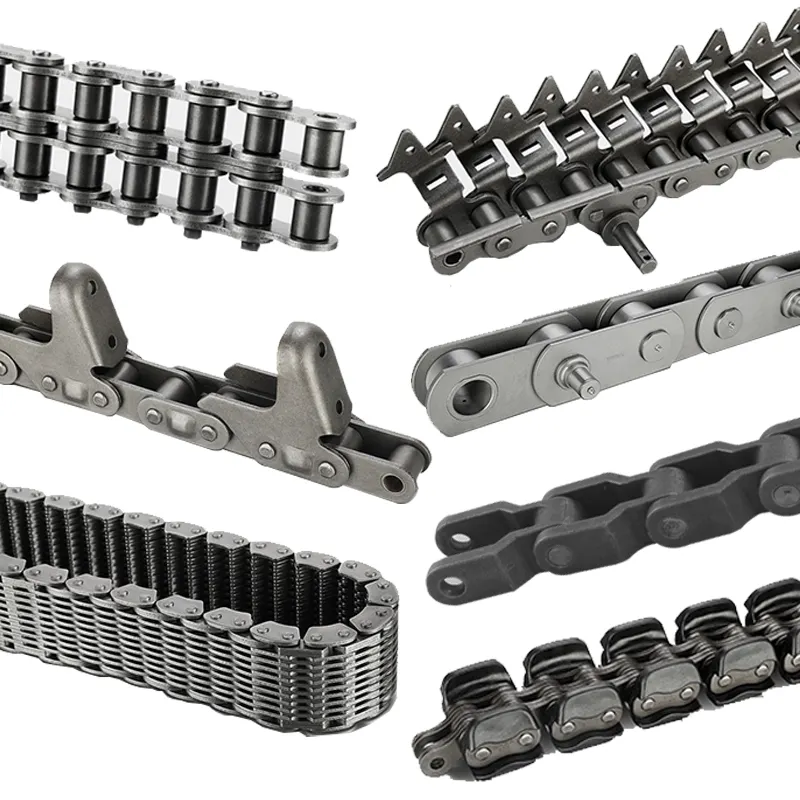
How does an industrial chain contribute to overall production efficiency?
An industrial chain plays a crucial role in enhancing overall production efficiency in various industries. Here are several ways in which an industrial chain contributes to production efficiency:
- Power transmission: Industrial chains efficiently transmit power from the drive source to different components of the machinery or equipment, enabling smooth and consistent operation. This ensures that the production process runs without interruptions or power loss, maximizing overall efficiency.
- Conveying and material handling: Industrial chains are commonly used in conveyor systems to transport materials, products, or components along the production line. They facilitate the movement of goods from one process to another, reducing manual handling and streamlining material flow. This improves production efficiency by minimizing bottlenecks, reducing cycle times, and optimizing resource utilization.
- Positioning and indexing: In automated assembly or packaging systems, industrial chains are used to precisely position and index workpieces or products. This enables accurate and efficient assembly, reducing errors and rework. The precise positioning capabilities of industrial chains contribute to improved production efficiency and product quality.
- Mechanical synchronization: Industrial chains are employed in machinery with multiple moving parts that require synchronization, such as in printing presses or packaging equipment. By linking and coordinating the movement of various components, industrial chains ensure precise timing and alignment, resulting in smooth operation and increased production efficiency.
- High load capacity: Industrial chains are designed to withstand heavy loads and transmit high levels of torque. This allows them to handle demanding applications and heavy-duty processes effectively. By providing reliable and robust power transmission, industrial chains contribute to improved production efficiency in industries that require the handling of substantial loads.
- Durability and reliability: Industrial chains are engineered to be durable and resistant to wear and fatigue, even in harsh operating conditions. Their long service life and minimal maintenance requirements contribute to increased production uptime and reduced downtime, enhancing overall production efficiency.
By facilitating power transmission, material handling, precise positioning, synchronization, and offering high load capacity, durability, and reliability, industrial chains play a vital role in optimizing production efficiency across various industries.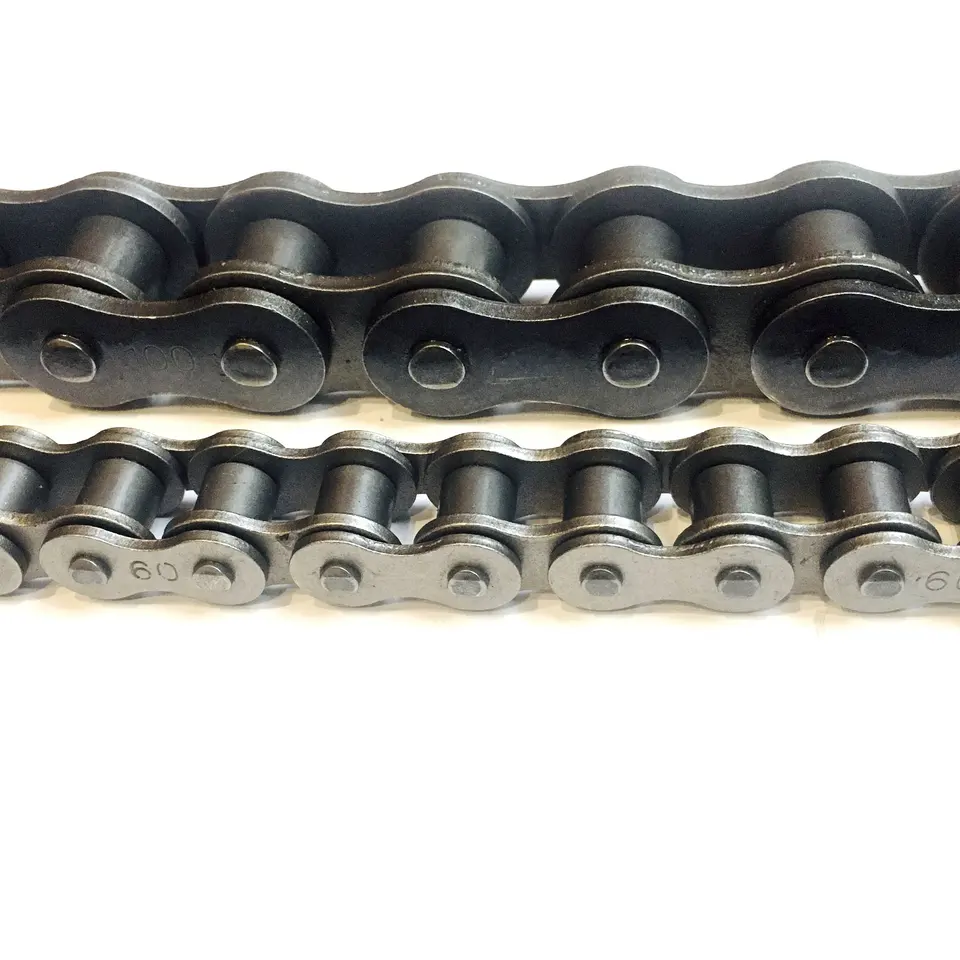
How do you select the appropriate lubricant for an industrial chain?
Selecting the right lubricant for an industrial chain is crucial to ensure its smooth operation, reduce wear, and extend its lifespan. Here are the key factors to consider when choosing the appropriate lubricant:
1. Chain type: Different types of industrial chains may have specific lubrication requirements. Refer to the manufacturer’s recommendations or technical specifications to determine the compatible lubricant.
2. Operating conditions: Consider the operating environment, such as temperature, humidity, and exposure to contaminants like dust or chemicals. Choose a lubricant that can withstand the specific conditions and provide adequate protection.
3. Load and speed: Evaluate the load capacity and speed of the chain system. High loads or high speeds may require lubricants with enhanced film strength and viscosity to prevent metal-to-metal contact.
4. Lubricant properties: Look for lubricants with properties such as high viscosity index, good thermal stability, anti-wear additives, corrosion resistance, and water resistance. These properties contribute to better lubrication and protection.
5. Lubrication method: Consider the lubrication method available for the chain system, such as manual lubrication, automatic lubrication systems, or oil bath lubrication. Ensure the selected lubricant is compatible with the chosen lubrication method.
6. Maintenance schedule: Assess the maintenance intervals and frequency of lubrication. Some lubricants offer longer-lasting performance, reducing the frequency of relubrication and maintenance requirements.
7. Environmental impact: Take into account any environmental regulations or considerations when selecting a lubricant. Choose environmentally friendly options, such as biodegradable or low-toxicity lubricants, if required.
Consult with lubricant suppliers or industry experts for specific recommendations based on your application and chain system requirements. They can provide valuable insights and help you select the most suitable lubricant to optimize the performance and longevity of your industrial chain.
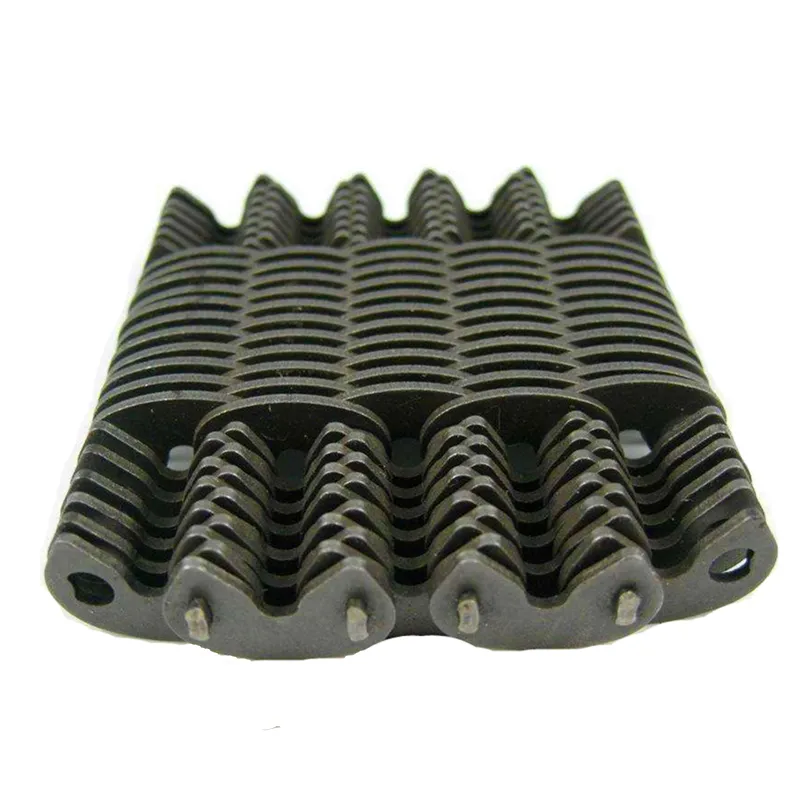
What factors should be considered when designing an industrial chain system?
Designing an industrial chain system involves careful consideration of various factors to ensure optimal performance, reliability, and safety. Here are some key factors to consider:
- Load Requirements: Determine the maximum load the chain system will need to handle, including static and dynamic loads. Consider factors such as weight, acceleration, deceleration, and shock loads.
- Speed and Acceleration: Take into account the required speed and acceleration of the system. High-speed applications may require special chain designs to maintain stability and reduce wear.
- Environmental Conditions: Consider the operating environment, including temperature variations, moisture levels, presence of chemicals or corrosive substances, and exposure to dust or debris. Choose a chain material and coating that can withstand the specific environmental conditions.
- Space Limitations: Evaluate the available space for installing the chain system. Consider factors such as clearance requirements, vertical or horizontal orientation, and any limitations imposed by surrounding equipment or structures.
- Maintenance and Lubrication: Determine the maintenance requirements of the chain system, including lubrication needs and accessibility for inspection and repairs. Consider if a self-lubricating or low-maintenance chain option is desirable.
- Noise and Vibration: Assess the noise and vibration levels associated with the chain system. Choose a chain design that minimizes noise and ensures smooth operation.
- Service Life and Durability: Estimate the expected service life of the chain system based on the application requirements and the durability of the chosen chain material and design.
- Safety Considerations: Ensure that the design adheres to safety standards and guidelines, including proper guarding, emergency stops, and adequate tensioning mechanisms.
- Compatibility and Interchangeability: Consider the compatibility and interchangeability of the chain system with other components, such as sprockets, shafts, and accessories, to facilitate easy installation, replacement, and maintenance.
By carefully considering these factors during the design phase, engineers can create an industrial chain system that meets the specific requirements of the application, ensures efficient operation, and maximizes the lifespan of the chain system.


editor by CX 2023-08-07