Product Description
Dust Cap Attached Industrial Transmission Chain QXG-200A Conveyor Chain QXG-200 with Dust Cover
Models | QXG-150 | QXG-150A | QXG-150B | QXG-200A | QXG-206A | QXG-240A | QXG-250A | QXG-300A |
Pitch of Chain(mm) | 150 | 150 | 150 | 200 | 206 | 240 | 250 | 300 |
Single Point Lifting(kg) | 8 | 8 | 8 | 30 | 30 | 50 | 50 | 100 |
Allowable Chain Tension(KN) | 2.5 | 2.5 | 2.5 | 3 | 3 | 5 | 5 | 10 |
Chain Breaking Force(KN) | >25 | >25 | >25 | >30 | >30 | >50 | >50 | >100 |
Weight(kg/m) | 2.83 | 2.83 | 2.83 | 5.5 | 5.7 | 6.5 | 6.8 | 11.5 |
Track Weight(kg/m) | 4.36 | 4.36 | 4.36 | 6.8 | 6.8 | 7.9 | 7.9 | 14.8 |
Running Speed (m/min) | multi-speed | multi-speed | multi-speed | multi-speed | multi-speed | multi-speed | multi-speed | multi-speed |
Pin Diameter(mm) | 7 | 7 | 7 | 9 | 9 | 10 | 10 | 16 |
Reduction Ratio | 1:10 | 1:10 | 1:10 | 1:10 | 1:10 | 1:10 | 1:10 | 1:10 |
Working Temperature | -20~220 | -20~220 | -20~220 | -20~220 | -20~220 | -20~220 | -20~220 | -20~220 |
Conveyor Power(KW) | 0.75,1.1,1.5 | 0.75,1.1,1.5 | 0.75,1.1,1.5 | 1.1, 1.5,2.2 | 1.1, 1.5,2.2 | 1.5, 2.2,3 | 1.5, 2.2,3 | 2.2,3,4 |
For more detailed parameters, please don’t hesitate to contact us The above parameters all can be customized to meet different customers special requirement including driving system When choosing the speed, the needed speed is suggested to be 0.6 to 0.8 times of the selected speed shit, which will enable the motor in a good working condition. | ||||||||
Other Products:
| Usage: | Transmission Chain, Transmission Chain |
|---|---|
| Material: | Alloy, Alloy |
| Surface Treatment: | Polishing, Polishing |
| Customization: | Available | Customized Request |
|---|
.shipping-cost-tm .tm-status-off{background: none;padding:0;color: #1470cc}
| Shipping Cost: Estimated freight per unit. | about shipping cost and estimated delivery time. |
|---|
| Payment Method: |
|
|---|---|
| Initial Payment Full Payment |
| Currency: | US$ |
|---|
| Return&refunds: | You can apply for a refund up to 30 days after receipt of the products. |
|---|
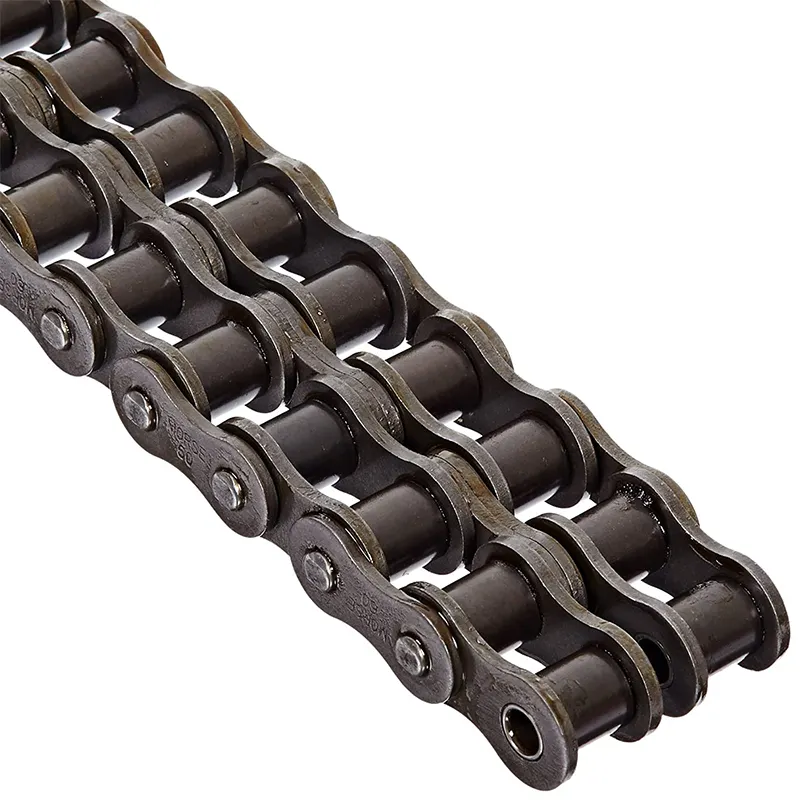
What are the future trends and advancements in industrial chain technology?
Industrial chain technology is continuously evolving to meet the changing needs of various industries. Here are some future trends and advancements that can be observed in industrial chain technology:
- Increased Automation: Industrial chains are becoming an integral part of automated systems. The advancement of robotics, IoT (Internet of Things), and artificial intelligence is driving the integration of industrial chains with smart technologies. This includes features such as remote monitoring, predictive maintenance, and real-time data analysis for optimizing chain performance and overall system efficiency.
- Improved Materials and Coatings: Ongoing research and development efforts are focused on developing advanced materials with enhanced properties for industrial chains. This includes materials with superior strength, durability, corrosion resistance, and wear resistance. Additionally, the development of advanced surface coatings and treatments further enhances the performance and lifespan of industrial chains.
- Energy Efficiency: Energy efficiency is a growing concern in industrial applications. Future industrial chains are likely to incorporate designs and features that reduce energy consumption, such as optimized chain profiles, reduced friction coatings, and improved lubrication systems. These advancements aim to minimize power losses and improve overall system efficiency.
- Integration with Digital Technologies: Industrial chains are expected to be increasingly integrated with digital technologies for seamless communication and data exchange. This integration enables better monitoring of chain performance, real-time diagnostics, and the ability to make data-driven decisions for maintenance and optimization. Digital twins, virtual simulations, and augmented reality (AR) are also emerging trends that allow for improved chain design, testing, and troubleshooting.
- Enhanced Safety Features: Safety remains a top priority in industrial settings. Future industrial chains may incorporate advanced safety features such as integrated sensors for detecting chain wear, overload conditions, or abnormal operating parameters. These features can provide early warning signs and help prevent accidents or equipment failures.
The future of industrial chain technology is driven by the need for increased efficiency, reliability, and safety. The integration of smart technologies, improved materials, energy efficiency measures, digitalization, and enhanced safety features are expected to shape the advancements in industrial chain technology in the coming years.
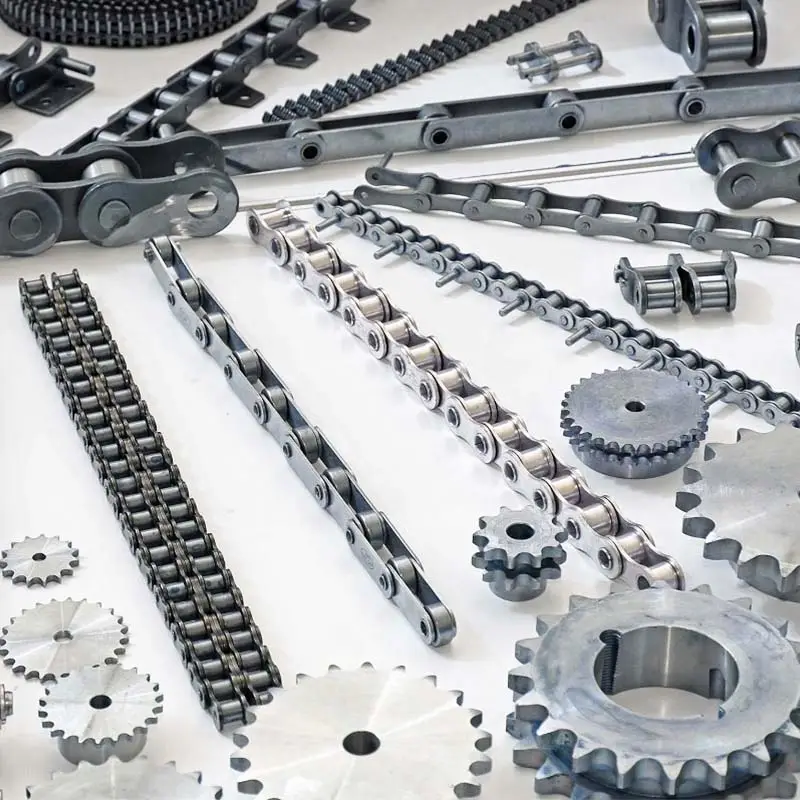
How does an industrial chain compare to other types of power transmission systems?
An industrial chain is a type of power transmission system that offers several advantages compared to other systems:
- Strength and durability: Industrial chains are designed to handle heavy loads and withstand tough operating conditions. They are known for their high strength and durability, making them suitable for demanding industrial applications.
- Efficiency: Industrial chains provide efficient power transmission, minimizing energy loss during operation. They offer high mechanical efficiency, which is especially important in applications that require precise and consistent power transfer.
- Flexibility: Industrial chains are flexible in terms of design and configuration. They can be easily adapted to various applications and can transmit power over long distances, making them suitable for a wide range of industrial machinery and equipment.
- Cost-effectiveness: Industrial chains are often cost-effective compared to alternative power transmission systems. They are relatively simple in design, easy to manufacture, and have a lower initial cost. Additionally, their durability and longevity reduce the need for frequent replacements, resulting in long-term cost savings.
- Reliability: Industrial chains are known for their reliability and consistent performance. When properly maintained and operated within their load and speed limits, they can provide reliable power transmission for extended periods.
- Versatility: Industrial chains can accommodate various environmental conditions, including high temperatures, corrosive environments, and high-speed applications. They can be made from different materials and configured with specific features to suit specific application requirements.
While industrial chains offer numerous advantages, it is essential to consider specific application needs and requirements when selecting a power transmission system. Factors such as load capacity, operating environment, speed, and precision may influence the suitability of an industrial chain compared to alternatives such as belts, gears, or shafts.
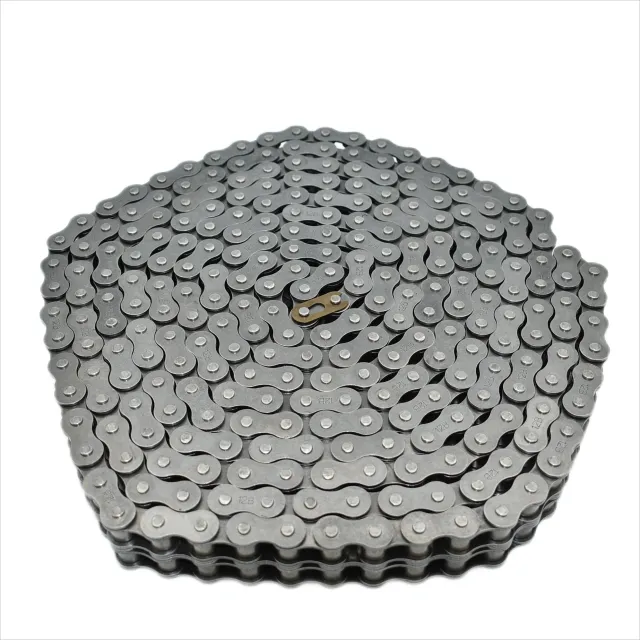
What are the advantages of using an industrial chain in industrial settings?
An industrial chain offers several advantages that make it a popular choice in industrial settings. Here are some key benefits:
- High load capacity: Industrial chains are designed to handle heavy loads and provide reliable power transmission, making them suitable for applications that require robust and durable components.
- Wide range of applications: Industrial chains find application in various industries, including manufacturing, automotive, mining, construction, agriculture, and more. They can be used for conveying, lifting, driving, and transferring power in different types of machinery and equipment.
- Efficient power transmission: Industrial chains have high efficiency in transferring power from one component to another, minimizing energy loss and maximizing the overall performance of the machinery.
- Flexible design: Industrial chains come in different sizes, configurations, and materials, allowing for flexibility in design and accommodating various application requirements. They can be customized to fit specific needs, offering versatility in industrial settings.
- Durable and long-lasting: Industrial chains are built to withstand heavy-duty operations and harsh environments. They are constructed using high-quality materials and undergo heat treatment or surface hardening processes to enhance their strength, durability, and resistance to wear and fatigue.
- Reliable and low-maintenance: Industrial chains are designed for continuous operation with minimal maintenance. Proper lubrication and periodic inspection are typically sufficient to ensure their reliable performance and extend their service life.
- Cost-effective: Industrial chains provide a cost-effective solution for power transmission compared to other alternatives. They have a relatively low initial cost, require less maintenance, and have a long lifespan, resulting in reduced downtime and overall operational costs.
- Easy installation and replacement: Industrial chains are designed for ease of installation and replacement. With standardized dimensions and readily available components, they can be quickly installed or replaced, minimizing downtime and maximizing productivity.
Overall, industrial chains offer durability, versatility, and efficiency, making them a preferred choice in industrial settings where reliable power transmission and heavy-load handling are required.


editor by CX 2023-11-08