Product Description
Product | Standard Double Pitch Roller chain | ||
Material | 40Mn steel,304 stainless steel, 316 stainless steel and 201 stainless steel. | ||
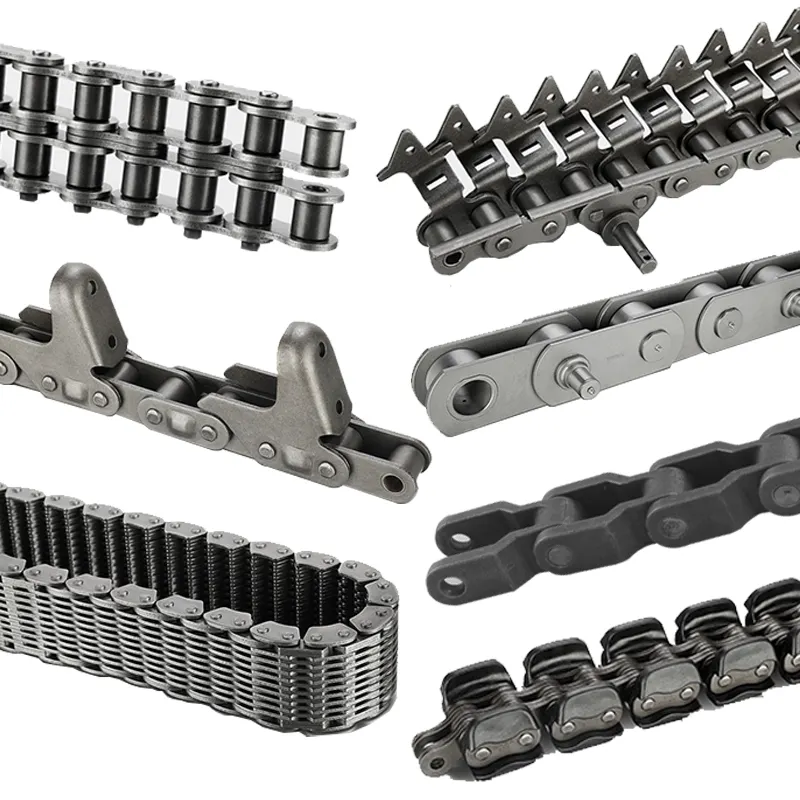
Types | Standard chains and special chains, such as A or B series chains, roller chains, driving chains, conveyor chains, hoisting chains, agricultural chains, sprockets, gears, wheels and so on. | ||
Series | A series(12.7-50.8mm pitches),B series (9.525-50.8mm pitches)and the heavy series. | ||
Short pitch precision roller chain | Simplex Roller Chains&Bushing Chains: 04C-1,06C-1,085-1,08A-1,10A-1,12A-1,16A-1,20A-1,24A-1,28A-1,32A-1,36A-1,40A-1,48A-1 04C-2,06C-2,085-2,08A-2,10A-2,12A-2,16A-2,20A-2,24A-2,28A-2,32A-2,36A-2,40A-2,48A-2 04C-3,06C-2,085-3,08A-3,10A-3,12A-3,16A-3,20A-3,24A-3,28A-3,32A-3,36A-3,40A-3,48A-3 | ||
Chain link type | Standard links (without attachment) and non-standard links (with attachment).
A1: One-side,one hole cranked attachments. | ||
Our Products Advantage | 1. Every step from production order to the packing process has a strict quality inspection. | ||
1.Fast delivery: Standard products can be delivered in as fast as 20 days
2.Good service: timely reply, prompt quotation, responsible for the product
3.High cost performance: can maintain price stability for a certain period of time, bringing greater profits to customers
4.Good quality: production and testing have corresponding supervision to ensure product quality and get high praise from customers
5.OEM service: products can be customized according to drawings and requirements
We are responsible for the ordered products. We are very confident in the products we produce. Of course, if you have any problems after receiving the goods, you can contact us directly. We will confirm and negotiate in time to solve your difficulties.
| Standard or Nonstandard: | Standard |
|---|---|
| Application: | Textile Machinery, Garment Machinery, Conveyer Equipment, Packaging Machinery, Food Machinery, Marine, Mining Equipment, Agricultural Machinery |
| Surface Treatment: | Oil Blooming |
| Structure: | Roller Chain |
| Material: | Carbon Steel |
| Type: | Bush Chain |
| Samples: | US$ 35/kg 1 kg(Min.Order) | |
|---|
| Customization: | Available | Customized Request |
|---|
How does an industrial chain contribute to overall production efficiency?
An industrial chain plays a crucial role in enhancing overall production efficiency in various industries. Here are several ways in which an industrial chain contributes to production efficiency:
- Power transmission: Industrial chains efficiently transmit power from the drive source to different components of the machinery or equipment, enabling smooth and consistent operation. This ensures that the production process runs without interruptions or power loss, maximizing overall efficiency.
- Conveying and material handling: Industrial chains are commonly used in conveyor systems to transport materials, products, or components along the production line. They facilitate the movement of goods from one process to another, reducing manual handling and streamlining material flow. This improves production efficiency by minimizing bottlenecks, reducing cycle times, and optimizing resource utilization.
- Positioning and indexing: In automated assembly or packaging systems, industrial chains are used to precisely position and index workpieces or products. This enables accurate and efficient assembly, reducing errors and rework. The precise positioning capabilities of industrial chains contribute to improved production efficiency and product quality.
- Mechanical synchronization: Industrial chains are employed in machinery with multiple moving parts that require synchronization, such as in printing presses or packaging equipment. By linking and coordinating the movement of various components, industrial chains ensure precise timing and alignment, resulting in smooth operation and increased production efficiency.
- High load capacity: Industrial chains are designed to withstand heavy loads and transmit high levels of torque. This allows them to handle demanding applications and heavy-duty processes effectively. By providing reliable and robust power transmission, industrial chains contribute to improved production efficiency in industries that require the handling of substantial loads.
- Durability and reliability: Industrial chains are engineered to be durable and resistant to wear and fatigue, even in harsh operating conditions. Their long service life and minimal maintenance requirements contribute to increased production uptime and reduced downtime, enhancing overall production efficiency.
By facilitating power transmission, material handling, precise positioning, synchronization, and offering high load capacity, durability, and reliability, industrial chains play a vital role in optimizing production efficiency across various industries.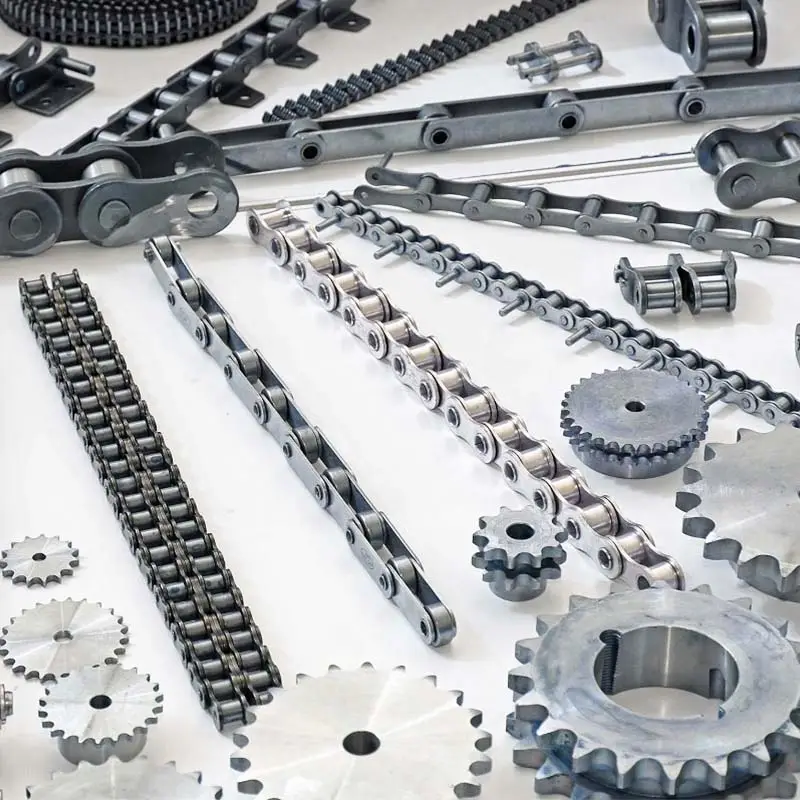
How does an industrial chain compare to other types of power transmission systems?
An industrial chain is a type of power transmission system that offers several advantages compared to other systems:
- Strength and durability: Industrial chains are designed to handle heavy loads and withstand tough operating conditions. They are known for their high strength and durability, making them suitable for demanding industrial applications.
- Efficiency: Industrial chains provide efficient power transmission, minimizing energy loss during operation. They offer high mechanical efficiency, which is especially important in applications that require precise and consistent power transfer.
- Flexibility: Industrial chains are flexible in terms of design and configuration. They can be easily adapted to various applications and can transmit power over long distances, making them suitable for a wide range of industrial machinery and equipment.
- Cost-effectiveness: Industrial chains are often cost-effective compared to alternative power transmission systems. They are relatively simple in design, easy to manufacture, and have a lower initial cost. Additionally, their durability and longevity reduce the need for frequent replacements, resulting in long-term cost savings.
- Reliability: Industrial chains are known for their reliability and consistent performance. When properly maintained and operated within their load and speed limits, they can provide reliable power transmission for extended periods.
- Versatility: Industrial chains can accommodate various environmental conditions, including high temperatures, corrosive environments, and high-speed applications. They can be made from different materials and configured with specific features to suit specific application requirements.
While industrial chains offer numerous advantages, it is essential to consider specific application needs and requirements when selecting a power transmission system. Factors such as load capacity, operating environment, speed, and precision may influence the suitability of an industrial chain compared to alternatives such as belts, gears, or shafts.
What factors should be considered when designing an industrial chain system?
Designing an industrial chain system involves careful consideration of various factors to ensure optimal performance, reliability, and safety. Here are some key factors to consider:
- Load Requirements: Determine the maximum load the chain system will need to handle, including static and dynamic loads. Consider factors such as weight, acceleration, deceleration, and shock loads.
- Speed and Acceleration: Take into account the required speed and acceleration of the system. High-speed applications may require special chain designs to maintain stability and reduce wear.
- Environmental Conditions: Consider the operating environment, including temperature variations, moisture levels, presence of chemicals or corrosive substances, and exposure to dust or debris. Choose a chain material and coating that can withstand the specific environmental conditions.
- Space Limitations: Evaluate the available space for installing the chain system. Consider factors such as clearance requirements, vertical or horizontal orientation, and any limitations imposed by surrounding equipment or structures.
- Maintenance and Lubrication: Determine the maintenance requirements of the chain system, including lubrication needs and accessibility for inspection and repairs. Consider if a self-lubricating or low-maintenance chain option is desirable.
- Noise and Vibration: Assess the noise and vibration levels associated with the chain system. Choose a chain design that minimizes noise and ensures smooth operation.
- Service Life and Durability: Estimate the expected service life of the chain system based on the application requirements and the durability of the chosen chain material and design.
- Safety Considerations: Ensure that the design adheres to safety standards and guidelines, including proper guarding, emergency stops, and adequate tensioning mechanisms.
- Compatibility and Interchangeability: Consider the compatibility and interchangeability of the chain system with other components, such as sprockets, shafts, and accessories, to facilitate easy installation, replacement, and maintenance.
By carefully considering these factors during the design phase, engineers can create an industrial chain system that meets the specific requirements of the application, ensures efficient operation, and maximizes the lifespan of the chain system.


editor by CX 2023-09-12