Product Description
Product Description
Product Parameters
| Standard | GB, ISO, ANSI, DIN |
| Type | Standard A and standard B precision roller chain, conveyor chain; |
| special chain with accessories, welding chain, leaf chain and sprocket | |
| ANSI chain No. | 40,50,60,80,100,120,140,160,180,200,240; |
| C40,C50,C60,C80,C100,C120,C140,C160; | |
| DIN/ISO chain No. | 08A,10A,12A,16A,20A,24A,28A,32A,36A,40A,48A; |
| C08A,C10A,C12A,C16A,C20A,C24A,C28A,C32A; | |
| Application | Food processing, pharmaceutical and chemical industries, electronics, machinery; |
| household appliances, automotive manufacturing, metallurgy, sewage treatment | |
| Series | A series,B series |
More Products
Advantage
Certifications
DETAILS ABOUT CZPT CHAIN
Exhibition
Workshop
Application
Packaging Details
Shipping
FAQ
1. Are you a manufacturer or trade Company?
We are a factory founded in 1997 with a trade team for international service.
2. What terms of payment do you usually use?
T/T 30% deposit and 70% against document, Western Union, L/C at sight
3. What is your lead time for your goods?
Normally 35 days after confirmed order. 30 days could be available in the low season for some items (during May to July), and 45 days during the new year and hot season ( Jan to March).
4. Samples
For customers who need sample confirmation before ordering, please bear in mind that the following policy will be adopted:
1) All samples are free of charge with a maximum value not exceeding USD 100.
2) The courier cost for the first-time sample sending will be charged by the consignee. We will send the samples with freight to be collected. So please inform your account with FedEx, UPS, DHL, or TNT so that we can proceed promptly.
3) The first-time courier cost will be totally deducted from the contract value of the trial cooperation.
4) OEM/ODM are both available.
| Usage: | Transmission Chain, Drag Chain, Conveyor Chain, Dedicated Special Chain |
|---|---|
| Material: | Stainless steel |
| Surface Treatment: | Polishing |
| Feature: | Heat Resistant |
| Chain Size: | 1/2"*11/128" |
| Structure: | Roller Chain |
| Samples: | US$ 1/Meter 1 Meter(Min.Order) | |
|---|
| Customization: | Available | Customized Request |
|---|
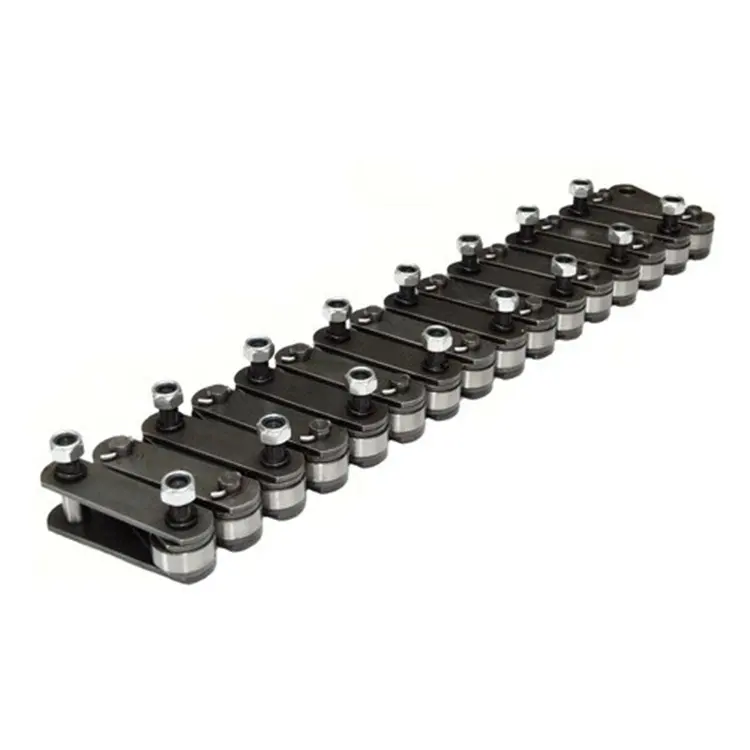
What are the design considerations for a long-span industrial chain conveyor?
Designing a long-span industrial chain conveyor requires careful consideration of several factors to ensure optimal performance and reliability. Here are some key design considerations:
- Chain selection: Choose a chain that is specifically designed for long-span conveyors. Consider factors such as chain strength, wear resistance, and fatigue resistance to handle the load and stress over the extended distance.
- Tensioning system: Implement an effective tensioning system to maintain proper tension in the chain throughout the conveyor’s length. This helps prevent chain slack and ensures smooth operation.
- Support structure: The support structure should be robust and capable of handling the weight of the conveyor and the conveyed materials over the long span. Consider factors such as the material used, structural design, and stability.
- Drive system: The drive system should be appropriately sized and positioned to ensure consistent and efficient power transmission along the entire length of the conveyor. Consider factors such as motor power, gear ratio, and drive unit placement.
- Guiding system: Implement an effective guiding system to keep the chain aligned and prevent deviation or misalignment. This helps ensure smooth and reliable operation, especially over long distances.
- Material handling: Consider the characteristics of the conveyed material, such as size, weight, and flow rate, to determine the appropriate design features such as conveyor width, chain speed, and loading/unloading mechanisms.
- Safety features: Incorporate necessary safety features such as emergency stops, guards, and interlocks to ensure operator safety and prevent accidents.
- Maintenance access: Design the conveyor with easy access points for maintenance and inspection. This allows for routine maintenance tasks, such as chain lubrication and cleaning, to be performed efficiently.
- Environmental conditions: Consider the environmental factors that may impact the conveyor’s performance, such as temperature, humidity, and exposure to contaminants. Choose materials and components that can withstand these conditions.
- Compliance with regulations: Ensure that the design of the long-span industrial chain conveyor complies with relevant safety and industry regulations.
By carefully considering these design considerations, a long-span industrial chain conveyor can be designed to meet the specific requirements of the application, providing reliable and efficient material handling over extended distances.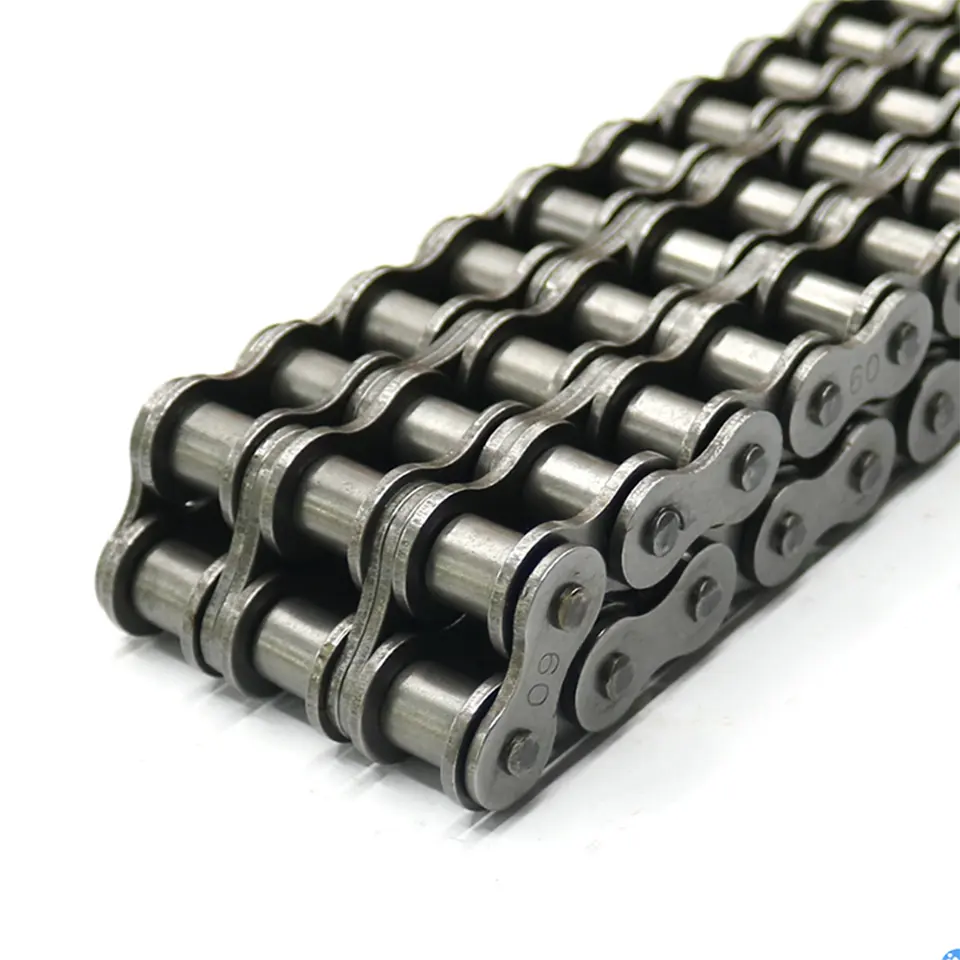
Can an industrial chain be used in high-temperature environments?
An industrial chain’s suitability for high-temperature environments depends on the specific chain type, material, and operating conditions. While some industrial chains are designed to withstand elevated temperatures, others may experience performance issues or damage when exposed to excessive heat.
Industrial chains used in high-temperature applications are typically constructed using materials that exhibit excellent heat resistance. Common materials include heat-resistant alloys, stainless steel, or specialized coatings that can withstand the elevated temperatures without compromising the chain’s strength or integrity.
When considering the use of an industrial chain in high-temperature environments, several factors should be taken into account:
- Temperature Range: Determine the maximum temperature the industrial chain will be exposed to. Different chain materials have different temperature limits, and it’s crucial to select a chain that can withstand the specific temperature range.
- Chain Type: Certain chain types, such as roller chains or silent chains, may be better suited for high-temperature applications than others. Consult the manufacturer’s guidelines and specifications to ensure the chosen chain type is suitable for the intended temperature range.
- Lubrication: Proper lubrication is essential in high-temperature environments to minimize friction, reduce wear, and ensure smooth chain operation. Special high-temperature lubricants or dry lubrication methods may be required to maintain chain performance under elevated temperatures.
- Heat Dissipation: Consider the ability of the industrial chain and the surrounding equipment to dissipate heat effectively. In some cases, additional cooling mechanisms or heat shielding may be necessary to protect the chain and prevent overheating.
- Application Requirements: Assess the specific demands of the application, such as load, speed, and cyclic operation, and ensure that the chosen industrial chain can handle these conditions at high temperatures.
It’s important to consult the manufacturer’s recommendations and technical documentation to verify the suitability of an industrial chain for high-temperature environments. Working with experienced engineers or industry experts can also provide valuable insights and guidance in selecting the appropriate chain for such applications.
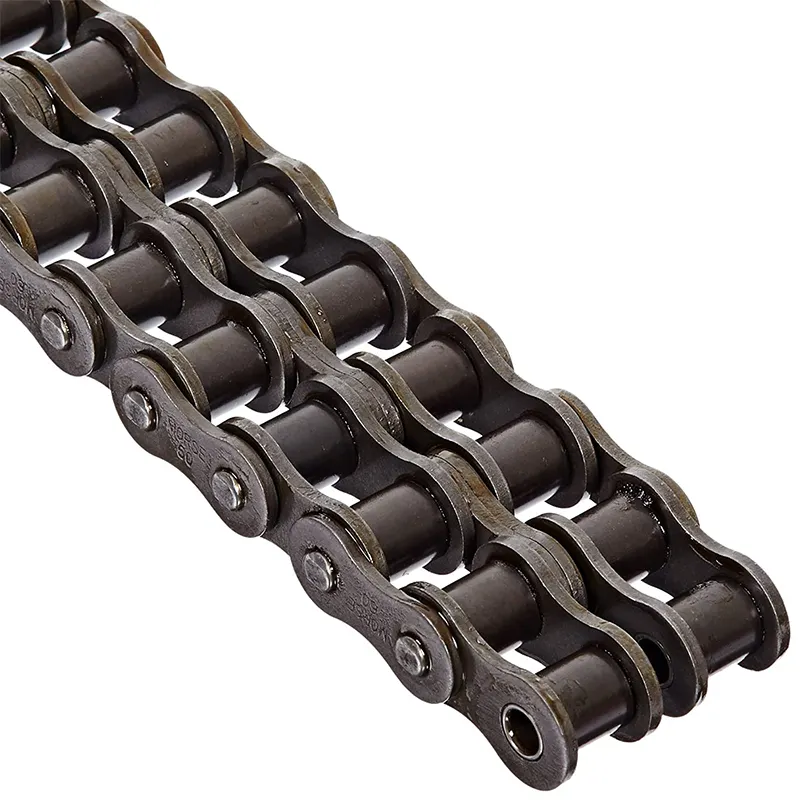
How do you troubleshoot common issues with industrial chains?
Troubleshooting common issues with industrial chains involves identifying the problem, determining its cause, and taking appropriate corrective actions. Here are some common issues and troubleshooting steps:
- Chain misalignment: If the chain is misaligned, it can cause excessive wear, noise, and tension issues. To troubleshoot this, visually inspect the chain’s alignment and check if the sprockets are properly aligned. Adjust the sprockets and ensure they are aligned with the chain’s centerline.
- Chain elongation: Over time, industrial chains can elongate, leading to poor performance and increased stress on the components. To troubleshoot elongation, measure the chain’s pitch and compare it to the manufacturer’s specifications. If the chain is elongated beyond the recommended limit, it may need to be replaced.
- Inadequate lubrication: Insufficient or improper lubrication can result in increased friction and wear. Check the lubrication system and ensure the chain is properly lubricated according to the manufacturer’s recommendations. Adjust the lubrication schedule or consider using a different lubricant if necessary.
- Excessive chain tension: Excessive tension can cause increased wear, noise, and strain on the chain and components. Check the tension of the chain and adjust it to the manufacturer’s recommended specifications. Ensure proper tensioning devices, such as tensioners or idler sprockets, are in place and functioning correctly.
- Broken or damaged links: If there are broken or damaged links in the chain, they can cause performance issues and potential failure. Inspect the chain for any visible damage, such as broken pins or links, and replace the affected components as necessary.
- Excessive chain wear: Excessive wear can lead to chain elongation, decreased performance, and increased risk of failure. Regularly inspect the chain for signs of wear, such as elongation, worn sprocket teeth, or excessive clearance between the chain and sprockets. Replace the chain if it has reached its wear limit.
It is important to consult the manufacturer’s guidelines and recommendations for troubleshooting specific issues with the particular type of industrial chain being used. Additionally, regular maintenance, including proper lubrication, tensioning, and periodic inspections, can help prevent common issues and prolong the lifespan of the industrial chain.


editor by CX 2023-08-14