Product Description
| Chain No | Pitch | Width Between Inner Plates | Pin Dia | Pin Length | Inner Plate Depth | Average Tensile Strength | Weight |
| Mm | mm | mm | mm | mm | mm | Kn | kg/m |
| 04B-1 | 6.000 | 2.80 | 1.85 | 6.80 | 5.00 | 3.2 | 0.11 |
| 05B-1 | 8.000 | 3.00 | 2.31 | 8.20 | 7.10 | 5.9 | 0.20 |
| *06B-1 | 9.525 | 5.72 | 3.28 | 13.15 | 8.20 | 10.4 | 0.41 |
| 08B-1 | 12.700 | 7.75 | 4.45 | 16.70 | 11.80 | 19.40 | 0.69 |
| 10B-1 | 15.875 | 9.65 | 5.09 | 19.50 | 14.70 | 27.50 | 0.93 |
| 12B-1 | 19.050 | 11.68 | 5.72 | 22.50 | 16.00 | 32.20 | 1.15 |
| 16B-1 | 25.400 | 17.02 | 8.28 | 36.10 | 21.00 | 72.80 | 2.71 |
| 20B-1 | 31.750 | 19.56 | 10.19 | 41.30 | 26.40 | 106.7 | 3.70 |
| 24B-1 | 38.100 | 25.40 | 14.63 | 53.40 | 33.20 | 178.0 | 7.10 |
| 28B-1 | 44.450 | 30.99 | 15.90 | 65.10 | 36.70 | 222.0 | 8.50 |
| 32B-1 | 50.800 | 30.99 | 17.81 | 66.00 | 42.00 | 277.5 | 10.25 |
| 40B-1 | 63.50 | 38.10 | 22.89 | 82.20 | 52.96 | 394.0 | 16.35 |
| 48B-1 | 76.20 | 45.72 | 29.24 | 99.10 | 63.80 | 621.6 | 25.00 |
| 56B-1 | 88.90 | 53.34 | 34.32 | 114.60 | 77.80 | 940.0 | 35.78 |
Our company offers variety of products which can meet your multifarious demands. We adhere to the management principles of “quality first, customer first and credit-based” since the establishment of the company and always do our best to satisfy potential needs of our customers. Our company is sincerely willing to cooperate with enterprises from all over the world in order to realize a CZPT situation since the trend of economic globalization has developed with anirresistible force.
| Standard or Nonstandard: | Standard |
|---|---|
| Application: | Food Machinery |
| Structure: | Roller Chain |
| Material: | Stainless Steel |
| Type: | Double Pitch Chain |
| Function: | Transmisssion |
| Customization: | Available | Customized Request |
|---|
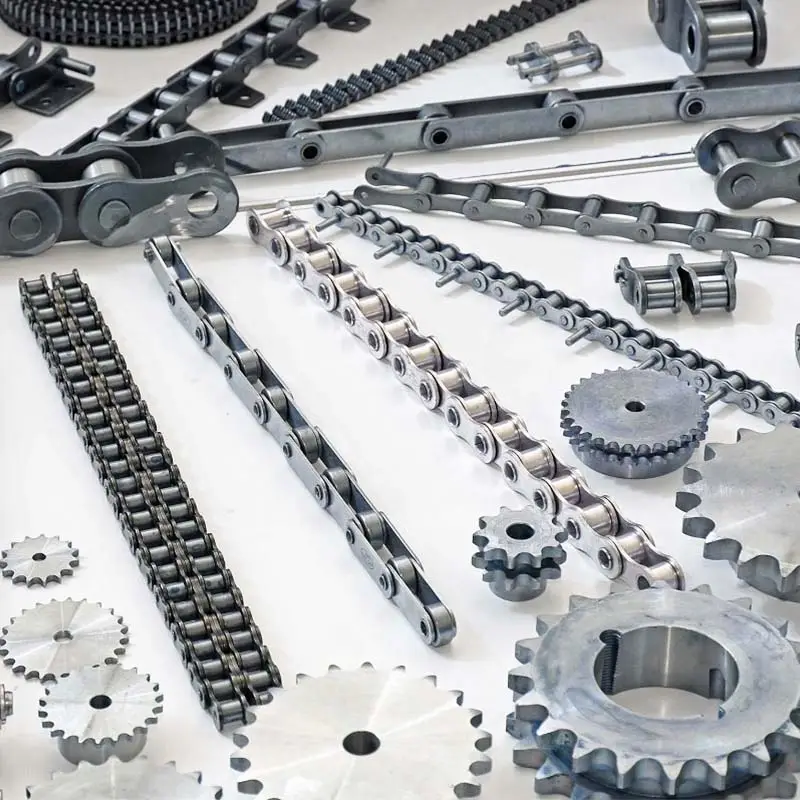
What are the factors to consider when selecting the pitch of an industrial chain?
The pitch of an industrial chain refers to the distance between adjacent pins or rollers on the chain. When selecting the pitch of an industrial chain, several factors should be considered:
- Load requirements: The pitch of the chain should be selected based on the expected load that the chain will need to carry. Higher loads typically require larger pitch sizes to ensure sufficient strength and durability.
- Speed of operation: The chain’s pitch should be chosen based on the speed at which the chain will be operating. Higher speeds may require smaller pitch sizes to maintain smooth and efficient operation.
- Space limitations: The available space for the chain system should be considered when selecting the pitch. Smaller pitch sizes can accommodate tighter spaces, while larger pitch sizes may be suitable for applications with more ample space.
- Application requirements: The specific requirements of the application should be taken into account. Factors such as the type of load being transported, the operating environment (temperature, moisture, etc.), and any special considerations (e.g., noise reduction, corrosion resistance) can influence the pitch selection.
- Chain compatibility: It is essential to ensure that the selected chain pitch is compatible with the sprockets or gears used in the system. The chain and sprocket/gear pitch should match to ensure proper engagement and efficient power transmission.
- Service life expectations: Consideration should be given to the desired service life of the chain. In applications with high-cycle operations or demanding conditions, selecting a chain with a smaller pitch size or a specialized design may be necessary to enhance longevity.
By carefully considering the load requirements, speed of operation, space limitations, application requirements, chain compatibility, and service life expectations, one can select the appropriate pitch size for an industrial chain that ensures optimal performance and reliability.
What are the noise levels associated with industrial chains?
The noise levels associated with industrial chains can vary depending on several factors, including chain design, lubrication, and operating conditions.
Chain Design: The design of the industrial chain, including the type of chain and its construction, can impact noise levels. Chains with smoother surfaces and precision manufacturing techniques tend to produce less noise.
Lubrication: Proper lubrication of the chain is essential for reducing noise. Applying a suitable lubricant to the chain can minimize friction and vibration, resulting in quieter operation.
Operating Conditions: The operating conditions of the industrial chain, such as the load, speed, and tension, can also affect noise levels. Higher loads and speeds, as well as inadequate tensioning, can increase noise levels.
Overall, it is important to consider noise levels when using industrial chains, particularly in noise-sensitive environments. Implementing proper chain design, regular lubrication, and maintaining appropriate operating conditions can help minimize noise and create a more comfortable work environment.
What are the main components of an industrial chain?
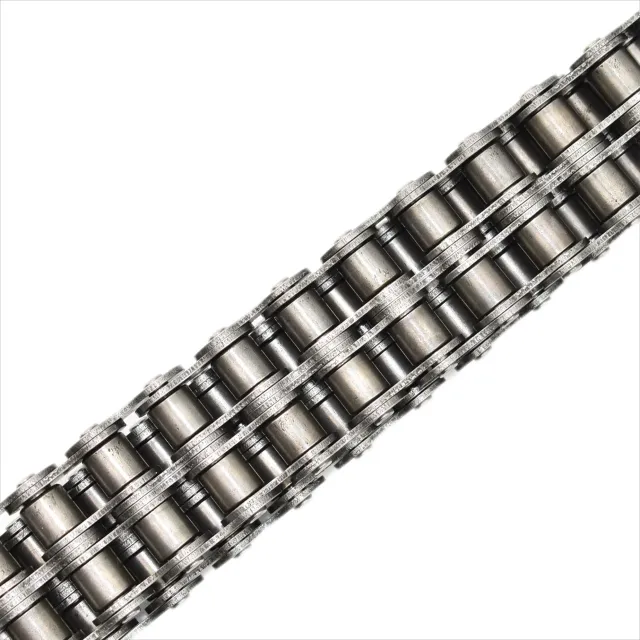
An industrial chain consists of several key components that work together to transmit power and facilitate the movement of loads. The main components of an industrial chain include:
- Chain Links: Chain links are the individual units that make up the chain. They are typically made of metal and are connected to form a continuous loop. The shape and design of the chain links may vary depending on the type and application of the industrial chain.
- Pins: Pins are cylindrical metal rods that connect the chain links. They pass through the inner bushings of the chain links, forming the pivot points for the movement of the chain.
- Bushings: Bushings are cylindrical metal sleeves that are mounted inside the chain links. They provide a smooth surface for the pins to rotate, reducing friction and wear.
- Rollers: Rollers are cylindrical components that sit between the chain links. They help facilitate the smooth movement of the chain by reducing friction between the chain and the surfaces it comes in contact with.
- Sprockets: Sprockets are toothed wheels that engage with the chain and transfer rotational motion. They are typically mounted on shafts or axles and come in various sizes and configurations to match the chain’s pitch and design.
- Tensioners and Guides: Tensioners and guides are additional components that help maintain the proper tension and alignment of the industrial chain. They ensure that the chain remains in contact with the sprockets and operates smoothly.
- Lubrication System: Industrial chains require proper lubrication to minimize friction, reduce wear, and extend their service life. Lubrication systems, such as oilers or grease fittings, are often integrated into the chain design to ensure adequate lubrication.
- Accessories: Depending on the specific application, industrial chains may include additional accessories such as attachments, covers, guards, or special coatings to enhance their performance, protect against external elements, or meet specific industry requirements.
These components work together to form a reliable and efficient power transmission system, allowing the industrial chain to withstand heavy loads, transmit motion, and operate smoothly in various industrial applications.


editor by CX 2023-08-10